

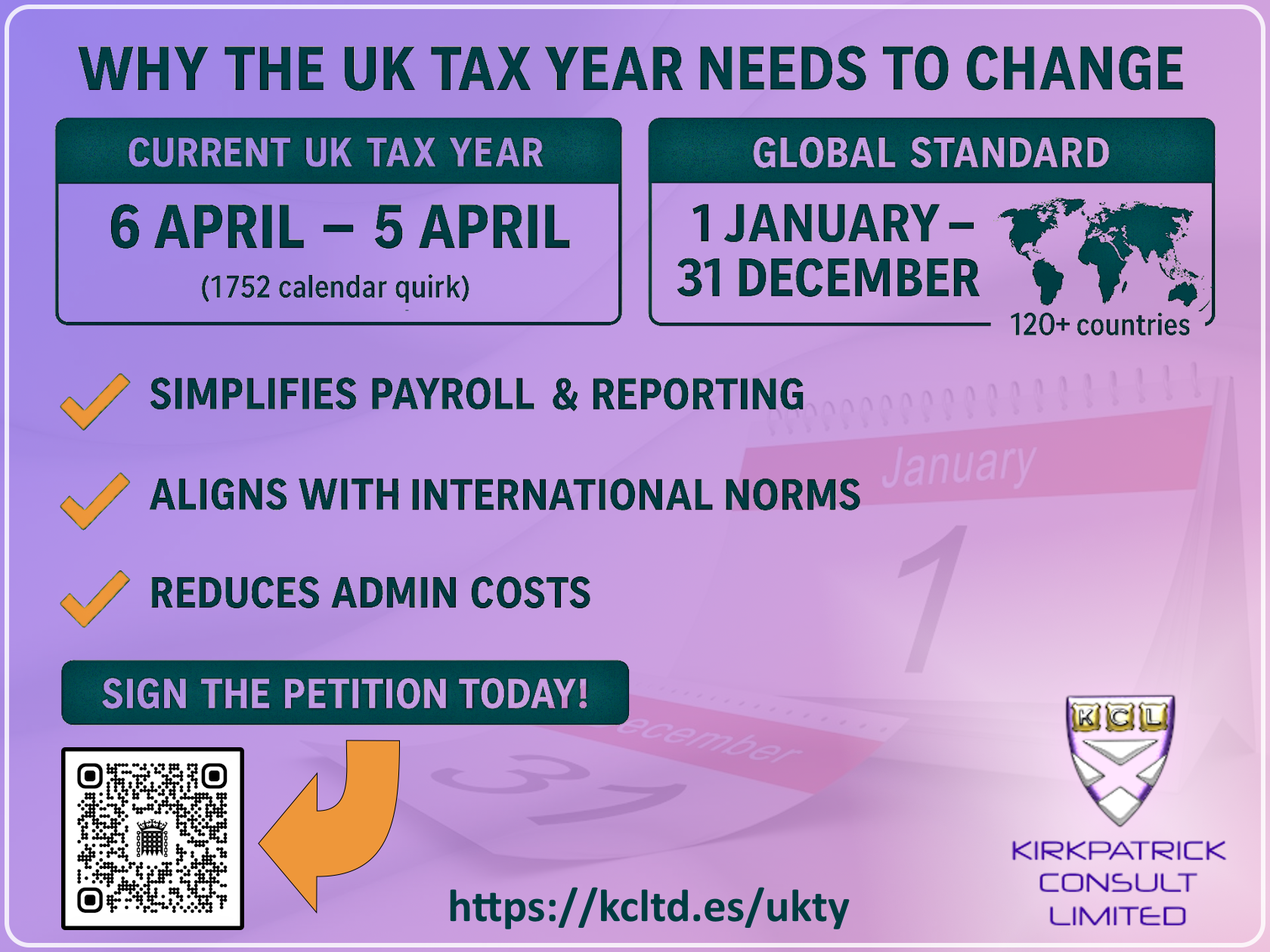
As the owner of Kirkpatrick Consult Limited, I see the inefficiencies of our outdated tax year every day. The UK tax year runs from 6 April to 5 April, a relic of 1752 when Britain switched calendars and “lost” 11 days. That historical quirk made sense then—but today, it’s a barrier to simplicity and global alignment.
Why Change?
- Global Standard: Over 120 countries start their tax year on 1 January, including the USA, Canada, Germany, France, and most of Europe.
- Simplification: Aligning with the calendar year would make payroll, budgeting, and reporting easier for businesses and individuals.
- International Competitiveness: UK companies trading globally face unnecessary complexity because our tax year doesn’t match international norms.
The Current System Is Outdated
The 6 April start date exists purely because of an 18th-century calendar adjustment. In today’s digital economy, this anomaly costs time and money.
Benefits for Small Businesses
- Easier financial planning.
- Reduced accounting costs.
- Fewer errors and compliance headaches.
What About Costs?
Yes, there’s a transition cost – but it’s a one-time investment for decades of simplicity. The long-term benefits far outweigh the short-term inconvenience.
What Happens Next?
👉 Sign the petition now and help modernise the UK tax year!
Please share this widely across your social media. Reaching Parliament depends entirely on how many people we can mobilise and every share helps push this campaign closer to being formally discussed by the government.












Leave A Comment